
Is Gorilla Trekking Worth the Cost?
A candid take on what you get for the money
The price tag is the first thing everyone mentions. In Rwanda, a single permit to spend one hour with a habituated mountain gorilla family costs $1,500. In Uganda it runs roughly $700 to $800, and in the Democratic Republic of Congo it has typically sat around $400 to $500. Add flights, lodging, transfers, and tips, and a short gorilla trip can easily reach $3,000 to $5,000 per person. So the question is fair: is one hour in a forest worth that much?
My honest answer is that it depends on what you expect, and on whether you understand where the money actually goes. (Permit prices change, so confirm current figures with the national park authorities before you budget.)
What the permit really pays for
It is tempting to treat the permit as a ticket, like entry to a theme park. It isn’t. It is closer to a conservation levy with an experience attached.
Mountain gorillas are among the few great apes whose numbers are growing. Surveys over the past decade put the total at a little over 1,000 individuals, up from a few hundred in the 1980s. That recovery did not happen by accident. It happened because tourism made living gorillas worth more to governments and local people than the land they stand on.
Permit revenue pays for ranger patrols, anti-poaching work, veterinary care, and the daily tracking teams who monitor each family. In Rwanda, a share of park revenue, commonly cited as around 10 percent, is directed to communities near the park for schools, clinics, water projects, and similar needs. Uganda runs comparable revenue-sharing arrangements around Bwindi and Mgahinga.
This matters for the cost question. You are not simply paying for your own hour. You are funding the system that keeps the animals alive, and that makes the experience possible for everyone who comes after you. If that framing appeals to you, the price feels different. If you only want to see gorillas as cheaply as possible, you may find it harder to justify.
Why the price differs so much
Rwanda positions itself as a premium, low-volume destination. Volcanoes National Park has a limited number of habituated families, and only eight visitors are allowed to visit each family per day. That caps daily permits at a few dozen. The high price is a deliberate choice to protect the animals while still generating serious revenue.
Uganda’s Bwindi Impenetrable Forest has many more habituated groups, so supply is larger and the price lower. The trade-off is terrain. Bwindi is steep, dense, and often muddy, and treks can be long.
The Congolese side, in Virunga National Park, is cheaper but comes with greater logistical and security complexity. It can be spectacular, but it is not the easy choice, and you should check current travel advisories carefully.
None of these is objectively the best. They are different bargains. Rwanda sells convenience, infrastructure, and reliability. Uganda sells value and variety. Congo sells a rawer experience at a discount, with real caveats.
The costs nobody puts on the brochure
The permit is only the beginning. Here is what a realistic budget includes.
Getting there. International flights to Kigali or Entebbe are often the largest single expense for travelers coming from outside Africa. From within the region, they are far more manageable.
Lodging. Options range from simple guesthouses at around $50 to $100 a night to luxury lodges that charge $1,000 or more per person per night. Many lodges near the parks are priced as high-end safari properties, and the gap between budget and luxury is enormous.
Transport. The roads around the parks can be rough. Most visitors hire a driver or join a tour. Self-driving is possible in some areas, but it is not for everyone.
Porters and tips. Hiring a porter typically costs around $20 to $30, and most people find it worthwhile. Porters carry your bag, offer a hand on steep sections, and the money goes straight to local households. Rangers, trackers, and guides also expect tips.
Extras. Hiking boots, gaiters, rain gear, gloves, and a good daypack add up if you don’t own them. Health costs matter too, such as vaccinations and travel insurance.
Once you add it all together, the permit often ends up being less than a third of your total spend. That is worth knowing, because it means choosing a cheaper permit does not necessarily make the trip dramatically cheaper.
What the hour is actually like
The trek itself can take anywhere from 30 minutes to five or six hours, depending on where the family spent the night. You start with a briefing, are assigned a group, and walk with guides and armed rangers. Trackers who left earlier radio back the gorillas’ location.
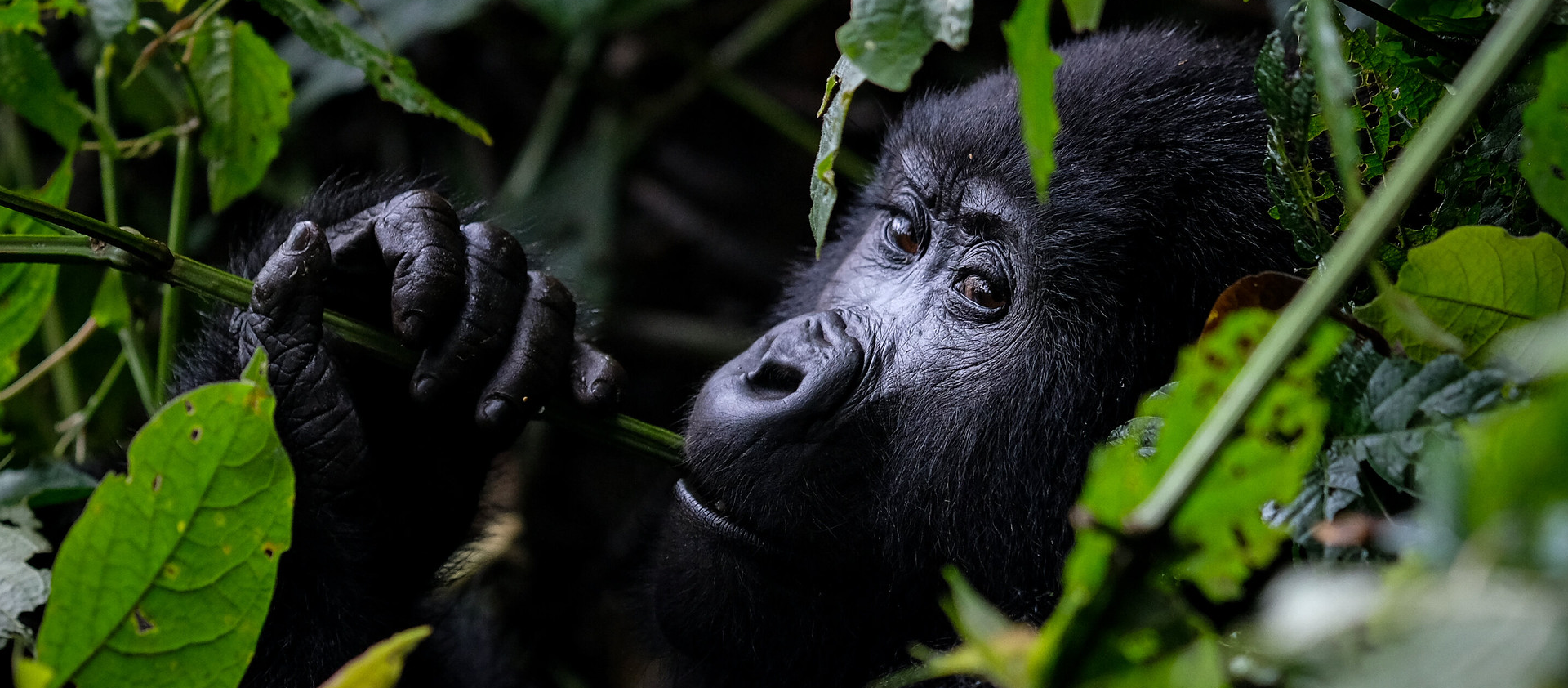
Then you arrive. The guides ask you to keep about seven meters away, though the gorillas do not always follow that rule. A young one may wander over and brush past your leg. A silverback may settle in the leaves a few feet away and look straight at you.
The hour is strictly timed, and it goes by quickly. You will see adults feeding, juveniles wrestling, and infants clinging to their mothers. Most people describe a mix of awe and quiet. It is not a zoo experience. These are wild animals, and you are a guest.
Two things are worth saying plainly. First, an hour is short, and some people feel a pang when the guide calls time. Second, your experience depends partly on luck. Weather, group behavior, and how dense the vegetation is can all change what you see and photograph. Most visitors have a good encounter, but not all are equally dramatic.
The physical reality
This is a real hike, not a stroll. Even the easier treks involve steep, slippery ground at altitude. Volcanoes National Park sits well above 2,000 meters, and Bwindi is not far off. If you are reasonably fit, you will manage fine. If you have mobility concerns, ask about the options. Porters can help a great deal, and some places arrange assistance such as sedan-chair style carries, though availability varies.
The minimum age is 15, and you cannot visit if you are sick with something contagious, since gorillas are vulnerable to human respiratory illnesses. This rule is firm, and it exists for good reason.
Who should skip it
Gorilla trekking is not for everyone, and it’s fine to say so.
If your budget is tight and the permit would force you to cut everything else, you might get more value from a broader trip. Rwanda and Uganda both offer wonderful experiences beyond gorillas, including chimpanzee tracking, golden monkeys, savanna safaris, and some of the best birding on the continent.
If you dislike physical effort, uncertainty, or rain, the trade-offs may outweigh the reward. And if what you want is a guaranteed perfect photograph, wildlife in general will disappoint you.
Who it’s really worth it for
For many people, it is one of the most affecting wildlife encounters available anywhere. The reasons are partly emotional. Gorillas share about 98 percent of their DNA with us, and the way a silverback watches you is hard to dismiss as mere animal behavior.
It’s also one of the few cases where tourism clearly helps the species it targets. Your money measurably supports protection, local jobs, and community development. That is rare and worth something.
If you have wanted to do this for years, can afford it without strain, and are prepared for the trek, I’d say it is worth it. Many travelers describe it as the highlight of their lives, and the cost fades from memory long before the experience does.
How to get the most for your money
- Book early. Permits, especially in Rwanda during the dry seasons, sell out well ahead of time.
- Travel in the shoulder or wet season. Prices on lodging can drop, and permits are easier to get. Expect more mud.
- Consider Uganda. If cost is the main concern, Bwindi offers a lower permit price and a very strong experience.
- Hire a porter. It improves your day and supports local people.
- Pack properly. Good boots and rain gear matter more than any camera gear.
- Go with realistic expectations. Treat it as a privilege, not a performance.
The bottom line
Is gorilla trekking worth the cost? If you measure value by hours, no. It is expensive for sixty minutes. If you measure it by what the experience does for you, and what your money does for the animals and communities around them, then for most people who go, the answer is yes.
The key is to go in with open eyes. Know where the money goes, budget for the full trip rather than just the permit, and accept that you are paying for something rare rather than something convenient. Do that, and you are far more likely to leave feeling you got what you paid for.