
Volcanoes National Park
Golden monkey tracking in Volcanoes National Park is a rewarding, less strenuous alternative to gorilla trekking. These endangered primates, found only in the Virunga Mountains, live in bamboo forests on the park’s lower slopes, so hikes are usually shorter and easier. Groups can number in the dozens, and the monkeys are lively, leaping through the bamboo, feeding, and playing, which makes for excellent photography. Treks typically last two to four hours, with an hour spent observing them. Permits cost far less than gorilla permits and are arranged through the Rwanda Development Board. Guides lead small groups, and visitors must keep a respectful distance.
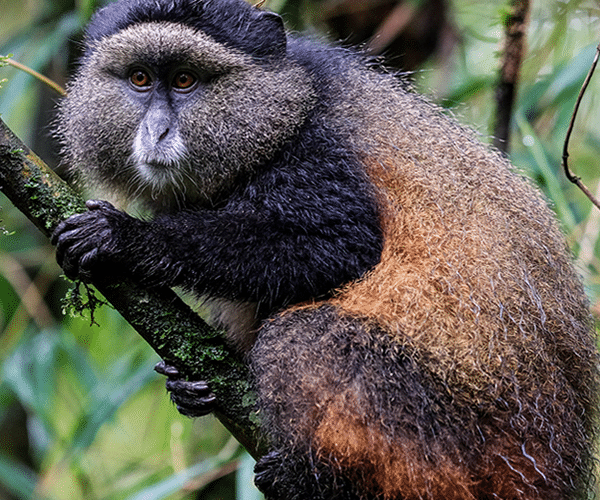
Primates tracking in Volcanoes National Park - Rwanda.
Comparing the Two Experiences
Both countries provide a similar core experience: an early start, an expert-led walk through bamboo forest, and an hour of lively close encounters. Differences are mostly in logistics and atmosphere. Rwanda’s Volcanoes National Park is closer to the capital, has more upscale lodging, and is well suited to short trips. Uganda’s Mgahinga is more remote, quieter and often combined with a longer southwestern circuit that includes Bwindi, Lake Bunyonyi and Queen Elizabeth National Park.
Costs also differ, and prices and permit rules are subject to change, so confirming details with RDB or UWA is wise. In general, travelers on a budget may find the golden monkey permit a good-value addition to a gorilla trek, while those with limited time may prefer Rwanda’s convenience.
The Species and Its Habitat
Golden monkeys live in groups that can number between 30 and 80 individuals, led by a dominant male and structured around females and their young. They are diurnal and spend most of their day foraging in the upper levels of the forest and on the ground. Their diet is dominated by bamboo shoots and leaves, supplemented with fruits, flowers, seeds, insects and fungi. Their ability to feed on young bamboo shoots, which few other primates tolerate, tells you why they thrive in this particular habitat.
They are fast, agile and playful, leaping between stems, chasing one another and feeding in constant motion. This is quite different from the calm, slow-paced behavior of mountain gorillas, and it is part of what makes tracking them so entertaining. Their main threats are habitat loss, forest degradation, human encroachment around park boundaries, disease transmission and, in neighboring regions, the effects of instability. Because their range is so restricted, tourism revenue and protected-area management are central to their survival.