
Wildlife Tours Uganda |
Queen Elizabeth National Park, Uganda: Four Key Areas
Queen Elizabeth National Park (QENP) sits in southwestern Uganda, straddling the equator and covering roughly 1,978 square kilometres across the districts of Kasese, Rubirizi, Rukungiri and Kanungu. Established in 1952 as Kazinga National Park and renamed two years later in honour of the visiting British monarch, it forms part of a larger conservation landscape that includes the adjoining Kyambura and Kigezi Wildlife Reserves and, across the border in the Democratic Republic of Congo, Virunga National Park. UNESCO designated the area a Biosphere Reserve in 1979, and the park is also a Ramsar-listed wetland site, reflecting the importance of its lakes, channels and swamps for waterbirds.
Kazinga Channel
What Sets Our Business Apart for Your Selection
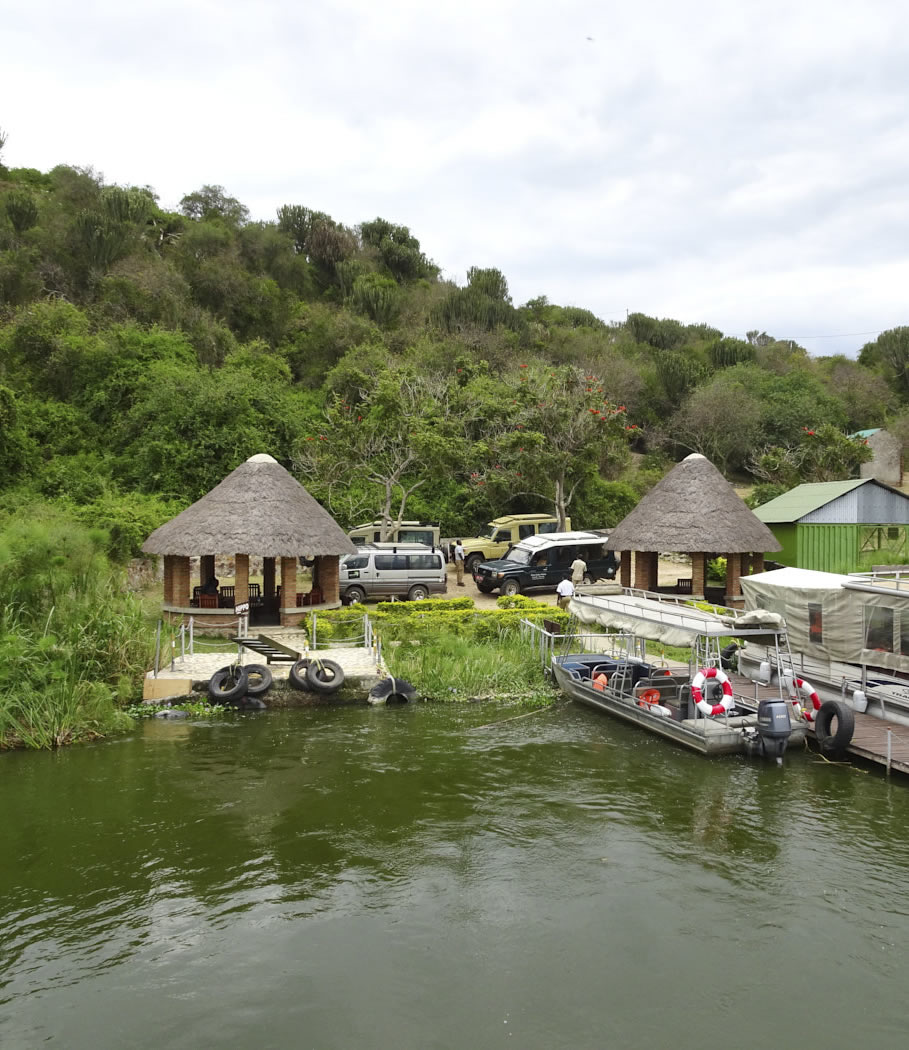
The Kazinga Channel is a natural waterway roughly 32 to 40 kilometres long that connects Lake George in the northeast to Lake Edward in the southwest. Lake George lies at a slightly higher level, so the channel carries water downstream into Lake Edward, which in turn drains toward the Semliki River and eventually the Nile system. The channel is not wide by the standards of African rivers, which is precisely what makes it so productive for wildlife watching: animals gather along its banks in close proximity, and boats can approach them at comfortable distances.
The channel runs through the Mweya Peninsula area, where the park’s main tourism hub is located. The peninsula juts out between the channel and Lake Edward, giving Mweya Safari Lodge, the park headquarters, the visitor centre and the campsites a dramatic setting with views toward the Rwenzoris on clear days.
Kasenyi Plains
The Kasenyi Plains, in the park’s northeast near Lake George’s shore and a short drive from Mweya, are open grassland savannah dotted with euphorbia candelabra trees and acacia, stretching toward the volcanic crater region. This is the park’s most reliable area for large-mammal viewing, and most visitors start their game drives here, especially at dawn. The open terrain offers good visibility, concentrated wildlife and easy-to-follow tracks. Its nutrient-rich grazing base also underpins the food chain that sustains predators.
Wildlife in Queen Elizabeth National Park
The boat cruise along the channel is arguably the signature activity at QENP, and the density of animals it offers is remarkable. The channel is home to one of the largest concentrations of hippopotamus in Africa, often numbering in the thousands across the wider lake and channel system. Pods wallow in the shallows during the day, grunting, yawning and surfacing in groups. Nile crocodiles bask on mud banks, sometimes sharing the shoreline with hippos with little apparent concern. On the banks, African buffalo come down to drink in large herds, and elephants regularly arrive to bathe and drink, particularly in the afternoons. Waterbuck, Uganda kob and warthogs graze nearby. Leopards and lions are occasionally spotted at the water’s edge, though this is not typical.
Kyambura Gorge
Kyambura Gorge, sometimes called the “Valley of Apes,” is a dramatic, steep-sided gorge in the eastern part of the park, roughly 100 metres deep and about 16 kilometres long. It was carved by the Kyambura River, which flows from the Rwenzori and Kichwamba foothills area toward Lake Edward. The gorge is a striking contrast to the surrounding savannah: from the rim, visitors look down onto a dense, lush strip of tropical forest threading through otherwise open grassland.
Geologically, the gorge reflects the volcanic and tectonic history of the Albertine (Western) Rift. The forest here is a kind of relict habitat, a green corridor sustained by the river’s moisture while the plains around it are drier. It can feel like a “lost world,” a phrase often used by those who have descended into it.
Chimpanzees
The gorge is best known for its habituated chimpanzee community. Chimpanzee tracking in Kyambura is a major draw because it is one of the more accessible places in Uganda to see wild chimps, and the experience tends to be more intimate and less crowded than in larger forests such as Kibale. The community is small, numbering only a few dozen individuals at most, and has been under real ecological pressure. The gorge is relatively isolated from other chimpanzee habitat, and the population has faced threats from snares set for bushmeat, habitat degradation outside the gorge, and in the past, human-wildlife conflict. Conservation partners such as the Jane Goodall Institute and the Uganda Wildlife Authority have supported monitoring, snare removal and community projects aimed at protecting the group.
Because of the small group size and the dense vegetation, sightings are not guaranteed, and visitors should treat the experience as a forest walk with a good chance, not a certainty, of seeing chimps. The trek involves a descent into the gorge via steep, sometimes slippery paths, so reasonable fitness is needed. Guides provide briefings on behaviour, and rules apply: visitors keep a minimum distance, limit group size, avoid flash photography and must not approach if unwell, to reduce the risk of disease transmission.
Ishasha Sector
The Ishasha sector occupies the southern end of the park, bordering the Democratic Republic of Congo, about two to three hours’ drive from Mweya. It is separated from the northern parts of the park by distance and a markedly different landscape: open savannah woodland with scattered acacia, fig and other large trees, fed by the Ntungwe and Ishasha Rivers. The Ishasha River forms the southwestern boundary with the DRC.
The sector feels wilder and quieter than the Mweya area. Fewer visitors make the trip, which gives a sense of space and solitude that many travellers value. It is also a useful stop for those travelling between Queen Elizabeth and Bwindi Impenetrable National Park, since the road to Bwindi’s southern sectors passes close by, making Ishasha a logical overnight on a gorilla trekking itinerary.
The tree-climbing lions
Ishasha’s claim to fame is its tree-climbing lions. In most of Africa lions rest on the ground, but here they are regularly seen lounging in the branches of large fig and acacia trees during the heat of the day. Several explanations have been offered: the branches may offer a cooler breeze and a better vantage point over prey, they may help the lions escape biting flies, and they may keep them away from the heat of the ground. Whatever the cause, the behaviour appears to be learned and passed down through prides, and it makes for striking photography.
Finding the lions takes patience. Guides check favoured trees, often in the late morning and afternoon, and sightings are not guaranteed, though they are common. Visitors are advised to keep a respectful distance and avoid disturbing the animals. As with Kasenyi, lions in the area have experienced conflict with people, and monitoring and community engagement are ongoing.
Featured Safaris
LET’S BUILD YOUR PROJECT
Najja Shopping Center Entabbe Rd
info@gorillastrekafrica.com
Mon — Fri: 8:00am — 18:00pm