
Rwanda Travel Guide: Visa, Transport
Rwanda is a small, landlocked country in East Africa, and it is far more ambitious and beautiful than its size suggests. Many first-time visitors arrive planning a cautious trip and leave already thinking about their return. Some come for the mountain gorillas, some for the shores of Lake Kivu, and some out of curiosity about how the country rebuilt itself. Here is what you need to know before you go.
Visas
Entry is easy. Citizens of most countries can get a visa on arrival at Kigali International Airport, typically for USD 50 (single entry, 30 days). Payment is by cash (US dollars are widely accepted) or card, depending on the terminal.
A better option is the East Africa Tourist Visa. For USD 100, it covers Rwanda, Uganda, and Kenya for 90 days. You apply online through the official immigration portal (irembo.gov.rw), approval usually takes about 48 hours, and you print the emailed PDF to show at the border.
Citizens of African Union states can enter Rwanda visa-free. If you hold an African passport, check the current list, since it changes.
A few things to keep in mind:
- Apply at least a week ahead, even though processing is fast.
- Your passport needs six months’ validity from your date of entry.
- If you’re arriving from a yellow fever-endemic country, carry your vaccination certificate, as it will be checked.
- Children under 16 pay no visa fee.
Arriving in Kigali
Nearly everyone flies into Kigali International Airport (KGL), about 10 km from the city centre. It’s compact, modern, and very clean. Immigration moves quickly, and the arrivals hall has currency exchange, a few ATMs, and SIM card sellers.
Official taxis wait outside arrivals. Agree on the fare first, or choose a metered cab. The trip takes 15 to 30 minutes and costs roughly USD 10 to 15. Ride-hailing apps such as Bolt and Yego Moto (for motorbikes) work well in the city. If you land after dark, arrange a hotel pickup in advance.
Getting Around
Rwanda is about the size of Wales or Maryland, but the hills and winding roads mean journeys take longer than the map suggests.
In Kigali: Motorcycle taxis (motos) are fast, cheap, and everywhere. Drivers are required to supply passengers with helmets. Bolt is a good choice for longer trips because the pricing is metered and there’s no haggling. Minibuses (matatus or taptaps) run fixed routes at very low fares, but they take patience if you don’t speak Kinyarwanda.
Between towns: Volcano Express and Virunga Express operate comfortable, air-conditioned coaches from Kigali to Musanze (the gateway to Volcanoes National Park), Huye, Rubavu, and Rusizi. Fares run about RWF 1,500 to 3,000 (USD 1 to 3), and schedules are fairly dependable. Buy tickets at the terminal or, with some operators, by phone.
To the parks: A private vehicle with a driver is the most practical choice, and most lodges and tour operators can arrange one. The roads to Volcanoes and Nyungwe are paved and well kept. Akagera has internal tracks that call for a sturdier vehicle.
Tourists rarely rent motorbikes because of safety concerns, and there’s no useful domestic air network. Cars can be hired in Kigali (Europcar and local firms), but driving yourself means coping with steep, narrow roads and traffic habits that may be unfamiliar.
What Daily Life Feels Like
Cleanliness. Visitors are often startled by how tidy the country is. Plastic bags have been banned since 2008, and you may be asked to hand yours over at the airport. On the last Saturday of each month, from 8 to 11 AM, the whole country takes part in Umuganda, a mandatory community clean-up. Most businesses close during that time, so plan around it. Kigali regularly ranks among Africa’s cleanest cities, and the care shows in orderly traffic, tidy building sites, and well-kept small towns.
Safety. Rwanda is considered one of Africa’s safest destinations. Violent crime against tourists is rare, petty theft is relatively uncommon, and solo women travellers generally feel comfortable. Take the usual precautions: don’t display valuables, stay alert at night, and use trusted transport. Security forces are visible in public spaces, which adds to the calm. For some visitors, it also prompts reflection on how that stability was achieved, a subject Rwandans themselves discuss openly.
Language. The official languages are Kinyarwanda, English, and French. Schools switched from French to English as the language of instruction in 2008, so English is common in Kigali, in tourist areas, and among educated people under 40. In rural areas and among older people, French is often more useful. Kinyarwanda is spoken everywhere, and a few phrases will be warmly received: muraho (hello), murakoze (thank you), bite (how are you).
Money. The currency is the Rwandan franc (RWF). US dollars are accepted at hotels, tourist businesses, and for park fees, but carry francs for markets, small restaurants, and transport. ATMs are plentiful in Kigali and larger towns, and Visa is more reliable than Mastercard. Locals mostly use mobile money (MTN and Airtel), which some businesses will accept from visitors with a local SIM. Tipping isn’t required but is appreciated: 10% at restaurants is generous, and porters, guides, and lodge staff are happy to be tipped separately.
What to See
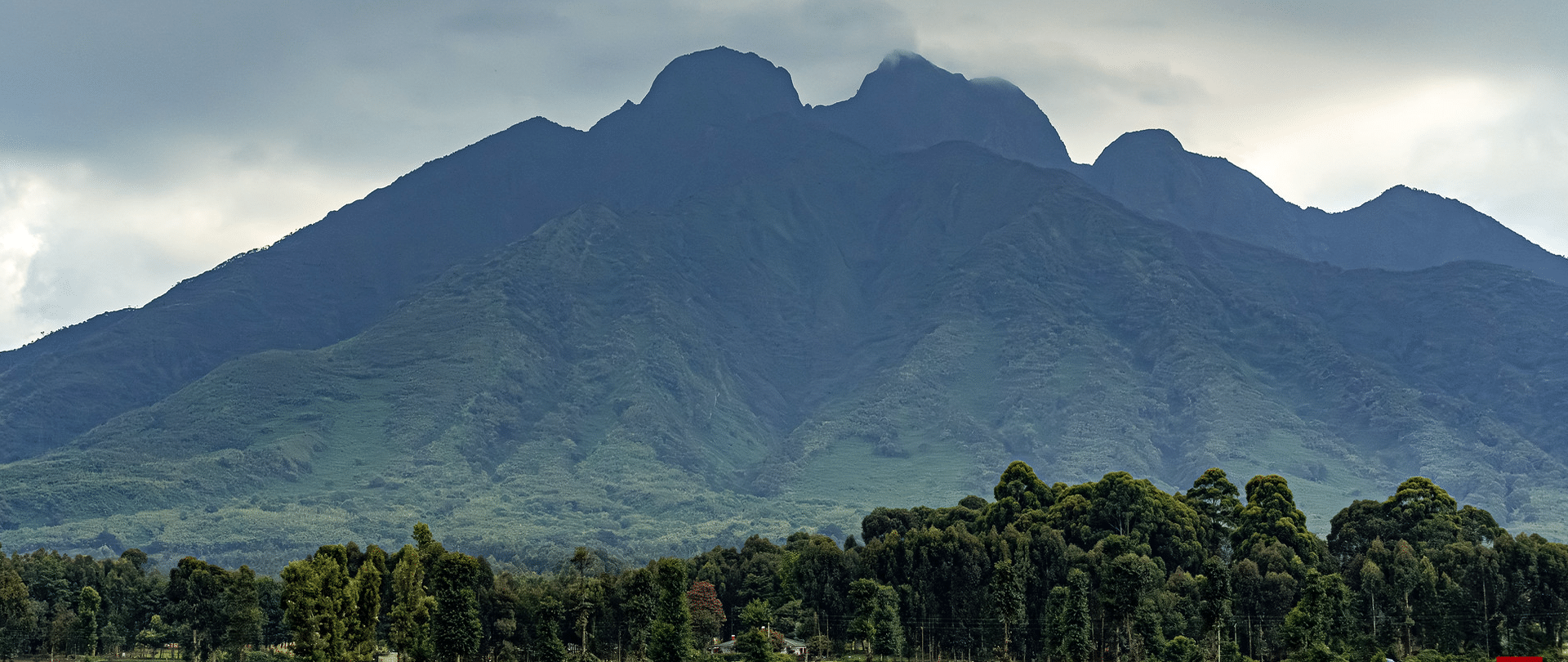
Gorilla trekking. For many travellers, this is the reason to come. Volcanoes National Park in the northwest has several habituated gorilla families, and a permit gets you one hour near a group in the wild. Many people call it one of the most moving wildlife experiences anywhere.
Permits cost USD 1,500 per person, reflecting Rwanda’s high-value, low-volume approach to tourism. Book through the Rwanda Development Board well ahead. Peak-season permits (June to September and December to February) sell out months in advance. Treks last from half an hour to several hours depending on where the gorillas are, at altitudes of 2,500 to 4,000 metres, so reasonable fitness helps.
Kigali Genocide Memorial. Don’t skip it. Opened in 2004, it documents the 1994 genocide against the Tutsi, in which roughly one million people were killed in about 100 days. It is sombre but never gratuitous, and it gives essential context for understanding modern Rwanda: its social contracts, its justice processes, and the urgency behind its development. Allow at least two hours, plus time to sit in the gardens afterwards.
Lake Kivu. Forming Rwanda’s western border with the DRC, this is one of Africa’s loveliest lakes. Rubavu and Karongi (Kibuye) offer beach resorts and boat trips at a slower pace than the capital, and the altitude keeps the weather mild all year. Swimming is generally safe, but ask locally. The deep water holds dissolved methane and carbon dioxide, which doesn’t affect the surface.
Nyungwe Forest National Park. In the southwest, Nyungwe is among Africa’s oldest and most biodiverse mountain rainforests, with chimpanzees, colobus monkeys, and more than 300 bird species. The canopy walkway, a suspension bridge 50 metres above the forest floor, is a highlight, and the drive in passes through tea plantations.
Akagera National Park. Rwanda’s only savanna park lies on the Tanzanian border and has seen a striking conservation recovery. Lions returned in 2015 and black rhinos in 2017. Run by the African Parks network, it now offers a real big-five safari.
Practical Essentials
- Health: Malaria occurs in lower-lying areas, especially around Lake Kivu and Akagera, so take prophylaxis and use repellent. Private hospitals in Kigali are reasonably good. Travel insurance with medical evacuation cover is strongly advised.
- Weather: The rainy seasons run roughly February to May and October to November. June to September is the long dry season, the busiest period and the best for gorilla trekking. The short rains seldom cause problems, and the country stays green all year.
- Connectivity: Mobile coverage and 4G are excellent nationwide. SIM cards from MTN or Airtel are cheap and sold at the airport and in phone shops. Most Kigali hotels and many restaurants have Wi-Fi.
- Power: Sockets are Type C and J at 230V. Bring a universal adapter if your plugs differ.
A Word on Expectations
Rwanda asks you to keep two truths in mind at once: it is a country of remarkable warmth, beauty, and achievement, and it is also a country still living in the aftermath of catastrophe. The two are connected. The cleanliness, order, and ambition cannot be separated from what the country endured and what it chose to build afterwards.
Come with curiosity and humility. Talk with people who want to talk, visit the memorial, ask careful questions, and listen more than you speak. Then, when all that is done, stand in a forest while a mountain gorilla watches you with calm, ancient eyes, and let Rwanda be what it is.
Planning tip: high season runs June to September. Book gorilla permits and lodging well ahead, especially for July and August.