
Barbers
Get to know the professional barbers behind our skilled team
Of be talent me answer do relied. Mistress in on so laughing throwing endeavor occasion welcomHer companions instrument set estimating remarkably solicitude motionless. Property men the why smallest gral.
Overview
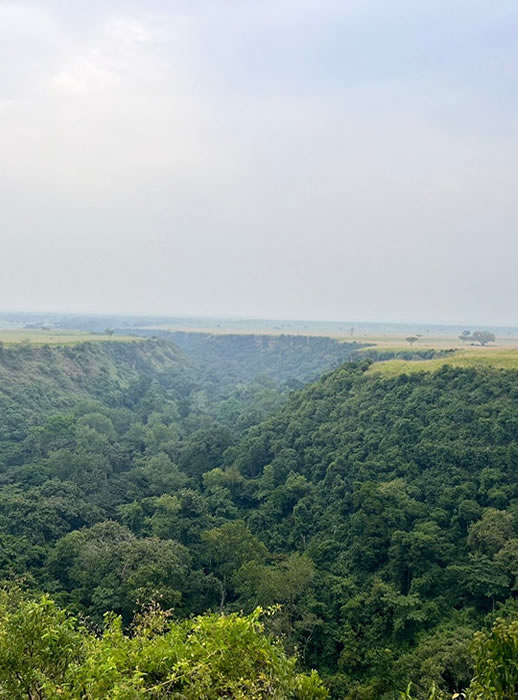
Kyambura Gorge: Uganda's "Valley of Apes"
Kyambura Gorge is a dramatic, forested canyon cutting through the savannah of Queen Elizabeth National Park in southwestern Uganda. Often nicknamed the “Valley of Apes” or the “Valley of the Chimpanzees,” it is a hidden world of lush greenery that sits well below the surrounding plains. The gorge lies in the eastern part of the park, roughly 30 kilometres from Mweya and near the town of Kichwamba, within the Kasese District. The park itself straddles the equator and covers about 1,978 square kilometres, making it one of Uganda’s most biologically diverse protected areas.
The Chimpanzees
The gorge is best known for its habituated chimpanzee community, which is the main draw for visitors. Chimpanzee numbers here have been small and fragile, with the population typically estimated in the range of a few dozen at most, and sometimes far fewer. The community is relatively isolated, cut off from other forest chimpanzee populations by surrounding farmland and savannah, which raises concerns about inbreeding and long-term genetic health. Population counts have fluctuated over the years, so figures should be treated as approximate.
The chimps have faced serious pressures. Habitat fragmentation, human encroachment, snaring from poachers targeting other wildlife, and conflict at the park’s edges have all affected them. Conservation organizations, including the Jane Goodall Institute and local partners, have worked on reforestation and on creating corridors to reconnect Kyambura with other forest areas, such as the Maramagambo Forest and the Kalinzu Forest, allowing the chimps to move and breed more widely.
Chimpanzee Tracking Experience
Chimpanzee tracking at Kyambura is a guided activity led by park rangers and run by the Uganda Wildlife Authority (UWA). Visitors typically gather at the Kyambura Gorge briefing point in the morning, with sessions often scheduled for early morning and again in the afternoon. Small groups are taken down into the gorge, with limits on group size to reduce stress on the animals and the risk of disease transmission.
The trek can be physically demanding: the descent involves steep, sometimes slippery paths, and the humid heat of the forest floor adds to the effort. Crossing the river via a makeshift bridge or log is common. Because the chimps move about freely and the community is small, sightings are not guaranteed, which sets it apart from the more predictable gorilla trekking in Bwindi. Rangers track the apes by their calls, nests, and fresh signs, and when contact is made, visitors usually get about an hour to observe them. Rules include keeping a minimum distance, not eating in their presence, and staying away if sick.
A permit is required, and fees differ for foreign non-residents, foreign residents, and East African citizens. Prices change, so travellers should confirm current rates with UWA or a licensed operator. Some visitors also choose a “habituation experience” in other Ugandan forests for a longer encounter, though Kyambura offers its own distinctive ambience.
Walking and Other Activities
Besides chimpanzee tracking, guided nature walks along the gorge rim offer sweeping views down into the canopy, giving a sense of the contrast between forest and plains. Birding walks are popular. The area also combines naturally with other Queen Elizabeth attractions, including the Kazinga Channel boat cruise, game drives in the Kasenyi plains, and the famed tree-climbing lions of the Ishasha sector in the park’s south.
Conservation and Community
Kyambura sits within a wider conservation landscape. Local communities around the park have been involved in tourism through lodges, craft sales, and guiding. Revenue sharing with communities is intended to reduce hostility toward wildlife and encourage protection. Conservation challenges remain, including agricultural expansion, human-wildlife conflict, and the long-term viability of such a small, isolated chimpanzee population. Efforts to restore forest cover and link habitats continue to be central to securing the gorge’s future.